How to Build a Better Meeting Culture for High-Growth Teams
12

Most meetings are where productivity goes to die. We show you how to flip the script, turning aimless calendar invites into structured sessions that actually move the needle.
Topics covered in this article
Shift from passive meetings to active workshops using structured methods to ensure 100% engagement.
Adopt a 'No Agenda, No Attenda' policy to protect team focus and ensure every session has a clear objective.
Leverage AI co-facilitation to handle timekeeping and note-taking, allowing leaders to stay present and focused on the team.
We have all been there. You look at your calendar on a Monday morning and see a solid block of back-to-back meetings. By noon, you have discussed everything and decided nothing. This is the 'meeting tax,' and for many managers, it is the single biggest barrier to getting real work done. A better meeting culture is not about having fewer meetings, though that often happens as a byproduct. It is about changing the fundamental nature of how your team interacts. At TeamLube, we believe the secret lies in moving away from the 'status update' and toward the 'workshop' model, where every minute spent together is designed to produce a concrete result.
The Hidden Cost of Meeting Recovery Syndrome
Unproductive meetings do more than just waste time. They create a psychological drag known as 'meeting recovery syndrome.' Research from the last year shows that it takes an average of 20 minutes for an employee to mentally transition back to deep work after a frustrating or pointless meeting. When you multiply that by five or six meetings a day, your team is not just losing the hours spent in the room; they are losing their entire capacity for focus. We have observed that in high-growth scaleups, this drain often goes unnoticed until burnout rates start to climb. Managers often feel the pressure to 'keep everyone in the loop,' but over-communication is frequently just a mask for a lack of trust or poor documentation.
The financial impact is equally staggering. Recent data suggests that companies with over 5,000 employees lose millions of dollars annually in 'sunk' meeting costs. This is not just about salaries. It is the opportunity cost of the features not built, the deals not closed, and the creative problems not solved because the team was busy debating the font size on a slide deck. To build a better culture, you must first acknowledge that time is your team's most precious non-renewable resource. Every meeting invite you send is a withdrawal from that bank. If you are not providing a return on that investment, you are essentially stealing focus from your people. A healthy culture starts with a radical respect for the 'maker's schedule' and a commitment to only interrupting it when the collective brainpower of the group is truly required.
Defining the Objective Before the Calendar Invite
We have all received that vague calendar invite titled 'Quick Sync' or 'Catch Up' with no description and no context. It is the professional equivalent of a 'we need to talk' text from a partner—anxiety-inducing and usually inefficient. To build a better meeting culture, you must adopt a strict 'No Agenda, No Attenda' policy. This sounds harsh, but it is the only way to protect your team's time. Before you even look at a calendar, you need to define the specific outcome you are looking for. Are you making a decision, generating ideas, or building a plan? If you cannot articulate the desired outcome in one sentence, you are not ready to call a meeting.
Once the objective is clear, the next step is to determine who actually needs to be there. We often default to inviting the whole team to avoid hurting feelings, but this is a mistake. A room with twelve people is rarely productive for deep problem-solving. Use the 'Rule of 7'—every person over seven reduces the likelihood of making a quick, high-quality decision by 10%. If someone is only there to be 'informed,' send them the summary or the Session Insights afterward. They will thank you for the extra hour of focus time. By being intentional about the 'why' and the 'who,' you set a professional tone that signals that meetings are for high-stakes collaboration, not just for passing the time. This clarity is the foundation of a high-performance culture.
From Passive Meetings to Active Workshops
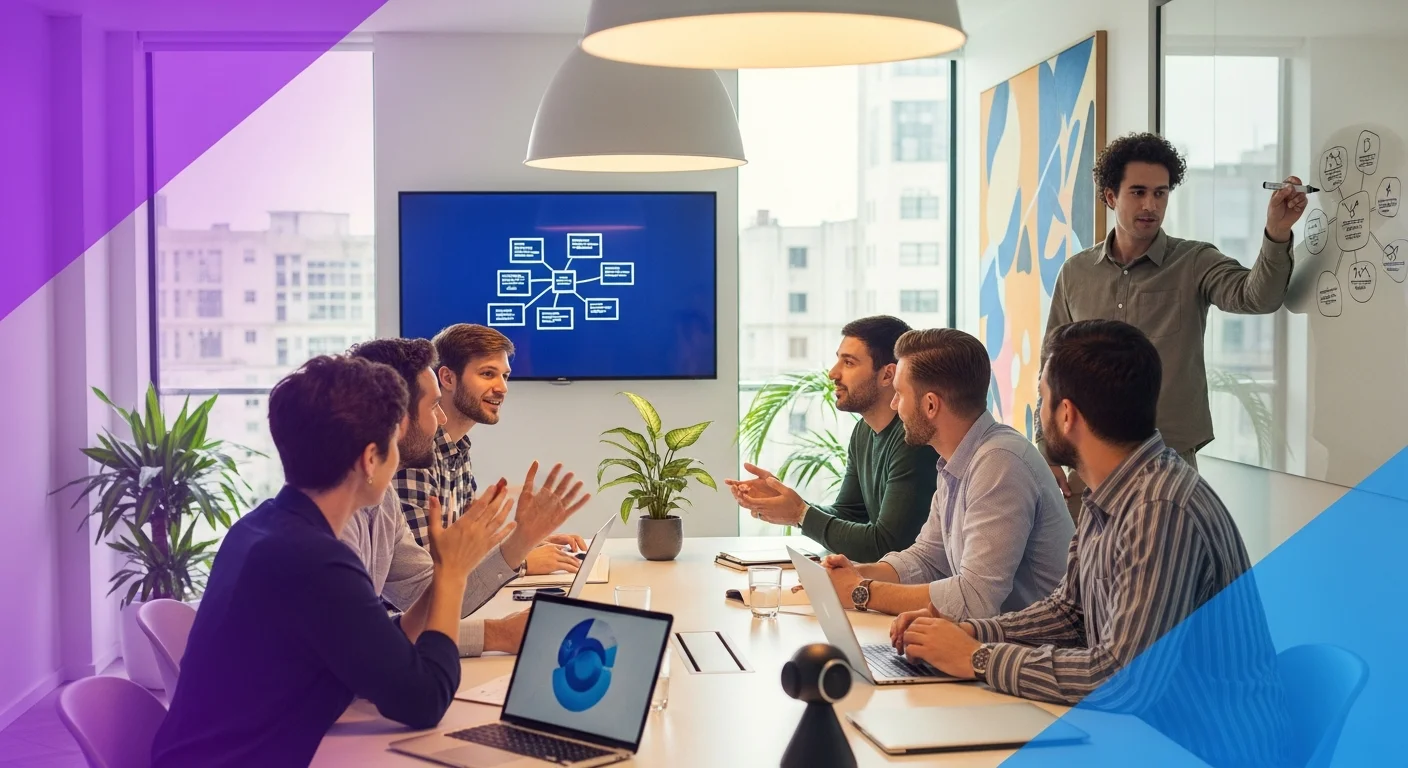
The biggest shift you can make in your team culture is moving from 'meetings' to 'workshops.' A meeting is primarily for alignment or updates and can often function with uneven participation. A workshop is structured to produce a concrete outcome and requires active participation from everyone. In short: meetings discuss topics, workshops work through them. When you treat a session as a workshop, the dynamic changes. You are no longer a lecturer; you are a facilitator. This is where we see the most significant gains in engagement. Instead of one person talking while five others check their Slack notifications, everyone has a role and a task.
At TeamLube, we provide over 150 curated workshop methods to help you make this transition. Whether you are doing a project retrospective, a brainstorming session, or a strategic alignment, there is a specific method designed to get you to the finish line faster. Using a structured method like 'Silent Brainstorming' or 'Dot Voting' ensures that the loudest voice in the room does not dominate the conversation. It levels the playing field, allowing the quietest engineer and the most vocal sales lead to contribute equally. This shift in format naturally improves culture because people feel their time is being used effectively. They see the progress happening in real-time on a dynamic whiteboard, and they leave the session knowing exactly what was decided and why. Workshops create a sense of shared ownership that a standard status sync simply cannot match.
The Art of the AI-Powered Agenda
A meeting without an agenda is just a conversation, and conversations rarely lead to documented decisions. However, we know that as a manager, you are often stretched thin. Designing a perfect 60-minute session with timed blocks and specific activities takes time you might not have. This is where AI becomes your best friend. Instead of staring at a blank document, you can use AI-powered agenda creation to build a roadmap based on your specific goals. You tell the system what you want to achieve, and it recommends the best flow to get there. This does not replace your leadership; it handles the heavy lifting of session design so you can focus on the people in the room.
A great agenda should be a living document. It should include time for 'settling in,' clear blocks for divergent thinking (generating ideas), and convergent thinking (narrowing them down). It should also account for breaks, especially in remote or hybrid settings where 'Zoom fatigue' is a real threat. By sharing this agenda in advance, you give your team the 'right to decline.' If someone sees the agenda and realizes their input is not needed for those specific blocks, they should feel empowered to skip the session and focus on their work. This level of transparency builds trust and ensures that the people who are in the room are the ones who truly need to be there. When the agenda is clear, the purpose is clear, and the results follow naturally.
Facilitation Without the Cognitive Overload
Facilitating a meeting is hard work. You have to watch the clock, manage the personalities, ensure everyone is participating, and somehow take notes that actually make sense later. It is a lot for one person to handle, which is why many managers default to just 'winging it.' We believe that every manager can be a great facilitator if they have the right support. This is why we built a voice-powered AI co-facilitator. Imagine having a partner in the room who quietly tracks the time, reminds you when it is time to move to the next topic, and captures the most important insights without you having to lift a pen. This allows you to stay fully present in the discussion.
When you are not worried about the logistics, you can focus on the emotional undercurrents of the room. You can notice when a team member looks hesitant or when a debate is becoming circular. The AI co-facilitator acts as your safety net. It ensures that the 'Session Insights' are captured accurately, focusing only on relevant notes rather than a messy transcript of every 'um' and 'ah.' This reduces the cognitive load on the manager and makes the entire experience feel smoother for the team. It turns a stressful coordination task into a guided collaboration. You are still the leader, but you no longer have to be the secretary and the timekeeper at the same time. This shift allows for more authentic leadership and better group dynamics.
Solving the Loudest Voice Problem
One of the most common complaints about meeting culture is that the same three people do all the talking. This is not just annoying; it is a risk to your business. If you are only hearing from the most extroverted members of your team, you are missing out on the insights of your deep thinkers and specialists. Building a better culture means intentionally designing sessions that bypass the traditional 'hand-raising' model. Using dynamic custom whiteboards that allow for anonymous contributions or simultaneous typing can transform the output of a session. When everyone is adding their thoughts to a digital board at the same time, the hierarchy of the room disappears.
Structured methods are the antidote to the 'loudest voice' problem. For example, using a '1-2-4-All' approach allows individuals to reflect alone, then in pairs, then in groups of four, before sharing with the whole room. This ensures that every idea is vetted and refined before it hits the floor. It also gives the more introverted team members the space they need to formulate their thoughts. As a manager, your job is to protect the intellectual diversity of your team. By using tools that facilitate these methods, you create a culture where the best idea wins, not the loudest one. This leads to better decisions and a much higher level of psychological safety within the team. People are more likely to engage when they know their contribution is valued and structured into the process.
Turning Discussion Into Actionable Outcomes
The most frustrating part of any meeting is the 'meeting about the meeting' that happens a week later because no one remembers what was decided. A better meeting culture is defined by its outcomes. If a session does not end with clear next steps, owners, and deadlines, it was a social gathering, not a work session. The challenge is that capturing these outcomes often feels like a chore. This is why integration is key. Your workshop tool should not be an island. It needs to talk to the tools where your team actually works—Slack, Trello, Asana, Jira, or Notion. When a decision is made in a TeamLube session, it should be able to flow directly into your project management system.
This seamless transition from 'talk' to 'task' is what builds momentum. It eliminates the 'black hole' of meeting notes that no one ever reads. When the team sees that their workshop contributions immediately turn into tracked tasks, they feel a sense of accomplishment. It reinforces the idea that meetings are a productive part of their workflow, not an interruption to it. We recommend ending every session with a five-minute 'Outcome Export' phase. Review the decisions captured by the AI co-facilitator, assign owners right there in the room, and hit export. This simple habit can save hours of follow-up emails and ensure that nothing falls through the cracks. It turns the workshop into a powerful engine for execution.
Sustaining a Culture of Continuous Improvement
Unproductive meetings do more than just waste time. They create a psychological drag known as 'meeting recovery syndrome.' Research from the last year shows that it takes an average of 20 minutes for an employee to mentally transition back to deep work after a frustrating or pointless meeting. When you multiply that by five or six meetings a day, your team is not just losing the hours spent in the room; they are losing their entire capacity for focus. We have observed that in high-growth scaleups, this drain often goes unnoticed until burnout rates start to climb. Managers often feel the pressure to 'keep everyone in the loop,' but over-communication is frequently just a mask for a lack of trust or poor documentation.
The financial impact is equally staggering. Recent data suggests that companies with over 5,000 employees lose millions of dollars annually in 'sunk' meeting costs. This is not just about salaries. It is the opportunity cost of the features not built, the deals not closed, and the creative problems not solved because the team was busy debating the font size on a slide deck. To build a better culture, you must first acknowledge that time is your team's most precious non-renewable resource. Every meeting invite you send is a withdrawal from that bank. If you are not providing a return on that investment, you are essentially stealing focus from your people. A healthy culture starts with a radical respect for the 'maker's schedule' and a commitment to only interrupting it when the collective brainpower of the group is truly required.
FAQ
Does TeamLube replace tools like Miro or Mural?
No, TeamLube is not a direct replacement for specialized whiteboarding tools like Miro or Mural. While we provide dynamic custom whiteboards for workshops, our focus is on the end-to-end facilitation process—including AI agenda design, method recommendations, and live voice-powered co-facilitation. We complement your existing workflow by adding the 'facilitation layer' that generic whiteboards lack.
How does the AI co-facilitator work during a live session?
Our AI co-facilitator is voice-powered and acts as a digital assistant during your live workshop. It listens to the discussion to capture relevant insights, manages the timer for each agenda block, and can even suggest when to move to the next topic if the conversation becomes circular. It helps the manager stay focused on the people while it handles the logistics of the session.
Can I use TeamLube for in-person meetings?
Absolutely. TeamLube is designed for remote, hybrid, and in-person sessions. In an in-person setting, the manager can use the platform to guide the agenda on a main screen while the AI co-facilitator captures notes via a central microphone. It bridges the gap between physical collaboration and digital documentation, ensuring that in-person insights aren't lost.
What kind of workshop methods are included in the library?
We offer over 150 curated methods ranging from classic frameworks like SWOT and Design Thinking exercises to modern team-building activities and agile retrospectives. Each method comes with clear instructions and a pre-configured whiteboard layout, so you don't need to be a facilitation expert to run a high-impact session.
How does TeamLube help with meeting follow-ups?
One of our core features is 'Outcomes in Action.' Instead of leaving you with a messy transcript, our AI captures specific decisions and action items. These can be exported directly to your preferred project management tools like Slack, Jira, Trello, or Notion. This ensures that the momentum from the workshop translates immediately into real-world tasks.
Is TeamLube suitable for small teams or just large companies?
TeamLube is ideal for any team that values effective collaboration, from small startups to mid-sized companies of up to 5,000 employees. It is particularly helpful for new managers who are transitioning from individual contributor roles and need a structured way to lead their teams through complex discussions and decision-making processes.
Explore more articles

Discover TeamLube
TeamLube is an AI facilitator for high-impact workshops and team events. Plan your sessions in minutes, access a library of dynamic whiteboard templates, and facilitate live sessions with confidence.
